
Property claim assessment, especially for commercial properties, requires physical inspection. Although virtual assessment is growing, physical assessment is still necessary, especially for large claims. When a factory is damaged by fire or other perils, it is important for a claims adjuster to physically inspect the damage and gather evidence, such as photos, videos, and statements. This requires gathering even the smallest details. With the advent of the digital world, we have laptops, mobile phones, and tablets that can be used to capture and upload this data into the claims system. However, spatial computing will make it possible to collect all of this data, from the time the claims adjuster enters the property until they leave. Especially devices like the Apple Vision Pro, which is expected to be released in 2024, are raising the bar. An experienced claims adjuster knows that even the smallest detail during a claims inspection can change the decision on the claim or the amount of the payout. Spatial computing can help with this.
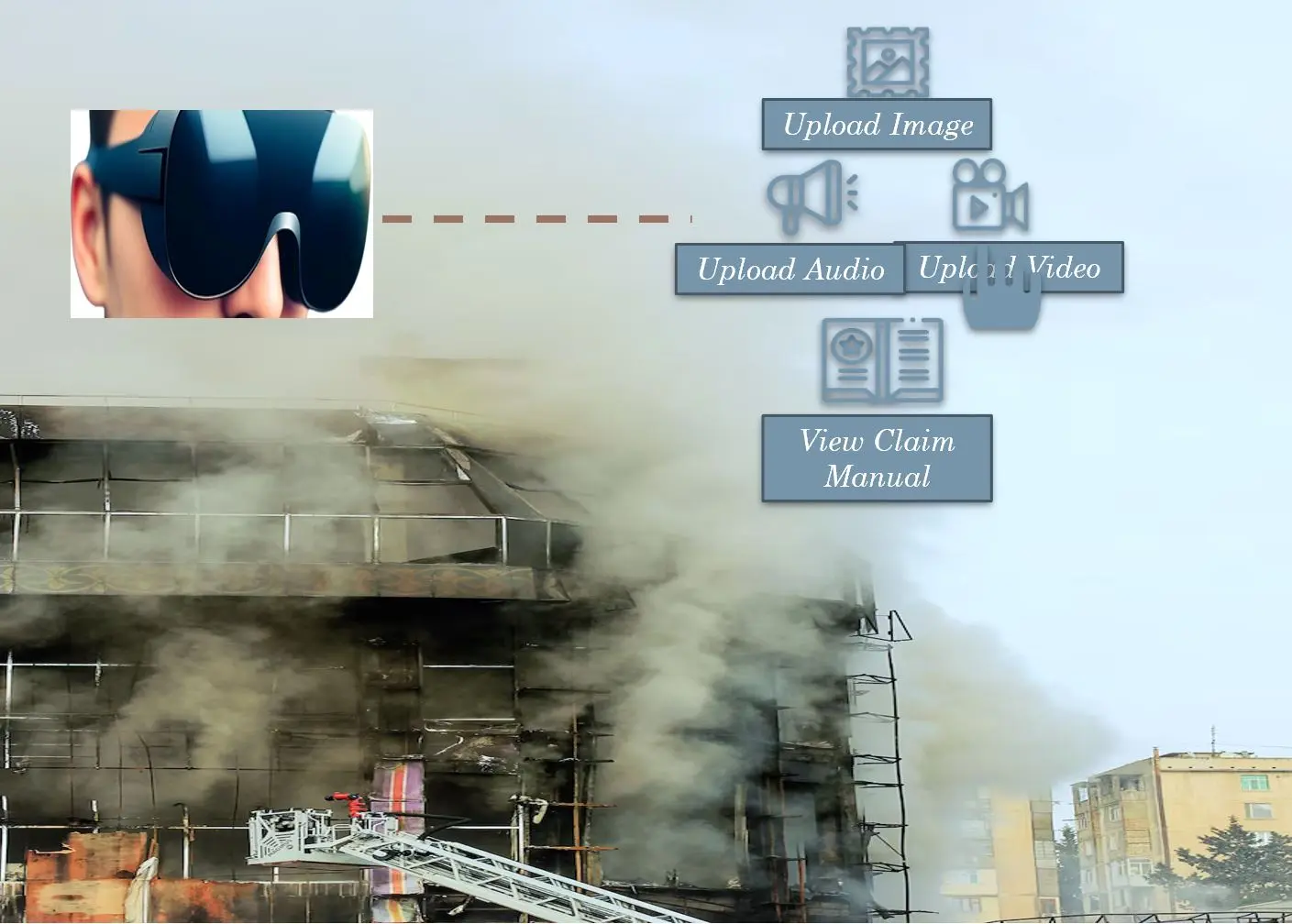
Imagine a scenario where a claims adjuster wears a headset powered by augmented reality and walks into a damaged property. The headset records everything the adjuster sees, hears, and does, including taking photos as needed. The adjuster can also invoke the policy details in the “space” by opening the insurer’s application and reviewing them when necessary. With a click of a button in the space, the adjuster can upload the details and return to the office. Is this a far-fetched idea? Let’s take a closer look at spatial computing and what Apple Vision Pro offers in this area.
Spatial computing is a technology paradigm that allows people to interact with digital information and objects in a way that is spatially consistent with their real surroundings. It is the buzz word that is growing as Apple Vision Pro announced its plan to launch the product in 2024.Apple Vision Pro is a headset-like gadget that allows users to connect the real environment and the virtual environment. It is not just a gadget, but a platform. Like how users view apps by tapping their iPhones, users can view applications in space and interact with them using Apple Vision Pro.
You can learn more about Apple Vision Pro here:
https://www.apple.com/apple-vision-pro/
Apple Vision Pro is expected to use both augmented reality and virtual reality. Augmented reality(AR) overlays digital information on the real world, while virtual reality(VR) creates a simulated environment that the user can interact with. The use of AR and VR is not new to the insurance industry. Several major insurance companies have adopted these technologies to improve customer experience and claim management.
However, the powerful platform that Apple is expected to deliver will not be just a gadget for individuals. It could also be a powerful tool for businesses. The expected cost of Apple Vision Pro is around $3,499, which is not affordable for everyone. However, for an insurance company, especially one that handles commercial property claims involving large losses, the cost-benefit analysis may be favorable, as it could significantly improve claims process efficiency and data collection.
Even though videos and photos can be taken using other gadgets by a claims adjuster, Apple Vision Pro offers usability and convenience, as seen in its introduction. This provides the convenience of recording everything seen and using spatial apps to upload the images, videos, and documents right away. Even though all of the Apple Vision Pro’s features are unknown, its virtual reality/augmented reality capabilities can be used to their full potential by bringing claim applications into the Apple Vision Pro platform.
Insurers can create a claim adjuster application in Apple Vision Pro that can be accessed through augmented reality. The application should have the following functions:
- Record the discussion between the adjuster and the policyholder.
- Record videos of the damaged property.
- Take photos of the damaged property.
- View the policy details.
All of these functions can be performed without taking out a separate device, such as a phone or tablet. The adjuster can simply wear the Apple Vision Pro headset and interact with the application using their voice and gestures. This allows the adjuster to focus on recording the details and evidence of the claim, while the application takes care of the rest. The goal of many insurers is to improve the effectiveness and efficiency of claims processing. By collecting the intricacies of the claim details, insurers can improve the accuracy of claim assessment and reduce claim leakage.
This is all based on what is expected out of Apple pro as a platform. Need to wait and see what capability that Apple pro brings in for ‘Spacial computing’.
Very useful and thought provoking article! Although I have seen videos of Apple vision pro, I did not think from an insurance application point of view. Thank is for this info!
Thank you Srini